AHK-Cu 100mg – Copper Peptide for Skin, Hair, and Regenerative Research
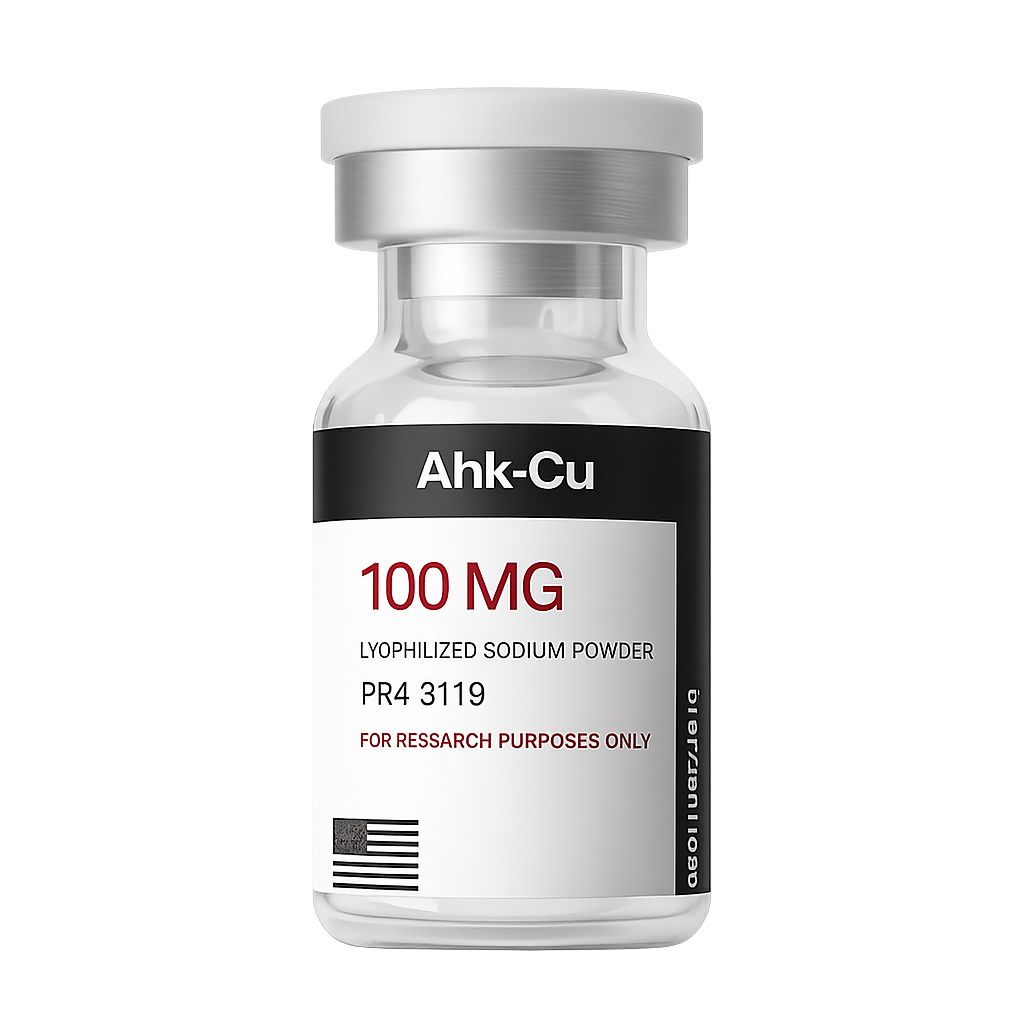
AHK-Cu 100mg is a synthetic copper peptide research compound widely studied for its role in cellular regeneration, collagen synthesis, and inflammation modulation. AHK-Cu (Alanine-Histidine-Lysine Copper) is structurally related to other well-known copper peptides and is frequently referenced in dermatological, cosmetic, and tissue repair research models.
This formulation provides 100 mg of AHK-Cu per vial, making it suitable for controlled peptide research applications involving skin quality, wound healing pathways, and hair follicle biology.
Research Applications of AHK-Cu 100mg
Wound Healing and Tissue Repair Research
AHK-Cu is studied for its ability to stimulate growth factor activity and support cellular proliferation, both of which are essential processes in tissue repair models. Research literature associates copper peptides with:
These properties make AHK-Cu relevant in wound healing and regenerative research, including studies involving epithelial repair and recovery following tissue stress.
Skin Regeneration and Anti-Aging Research
In skin-focused research, AHK-Cu is commonly evaluated for its role in collagen and elastin synthesis, two structural proteins critical to skin firmness and elasticity. Research interest often centers on:
-
Extracellular matrix support
-
Improved skin texture and resilience
-
Protection against oxidative stress
Due to its antioxidant properties and involvement in cellular repair pathways, AHK-Cu is frequently referenced in anti-aging and skin regeneration research models.
Hair Growth and Scalp Research
AHK-Cu has also been studied in hair follicle and scalp biology research, where copper peptides are associated with:
-
Support of hair follicle size and structure
-
Extension of the anagen (growth) phase of the hair cycle
-
Maintenance of scalp tissue health
These properties have led to its inclusion in research involving hair density, follicular regeneration, and scalp condition studies.
Inflammatory Pathway Modulation
Copper peptides such as AHK-Cu are investigated for their anti-inflammatory properties, particularly in research models involving irritated or inflamed skin. Studies often examine their effects on:
-
Pro-inflammatory cytokine signaling
-
Redness, swelling, and tissue stress responses
-
Skin barrier integrity
As a result, AHK-Cu is relevant in research exploring inflammatory skin conditions and immune-mediated tissue responses.
Research Handling and Preparation
In laboratory settings, AHK-Cu 100mg is typically reconstituted using bacteriostatic water and handled according to standard peptide research protocols. Gentle swirling during reconstitution is recommended to preserve peptide structure and stability.
Summary of AHK-Cu 100mg Research Profile
AHK-Cu 100mg is widely referenced in peptide research for its involvement in:
-
Cellular repair and regeneration pathways
-
Collagen and elastin synthesis
-
Hair follicle and scalp biology
-
Inflammation and oxidative stress modulation
Its broad research profile makes AHK-Cu 100mg a common subject of interest in skin, hair, and regenerative peptide research environments.
Related Resources