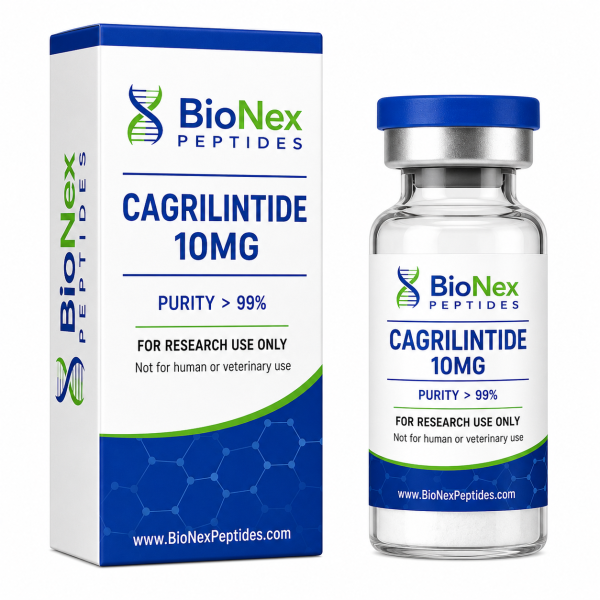
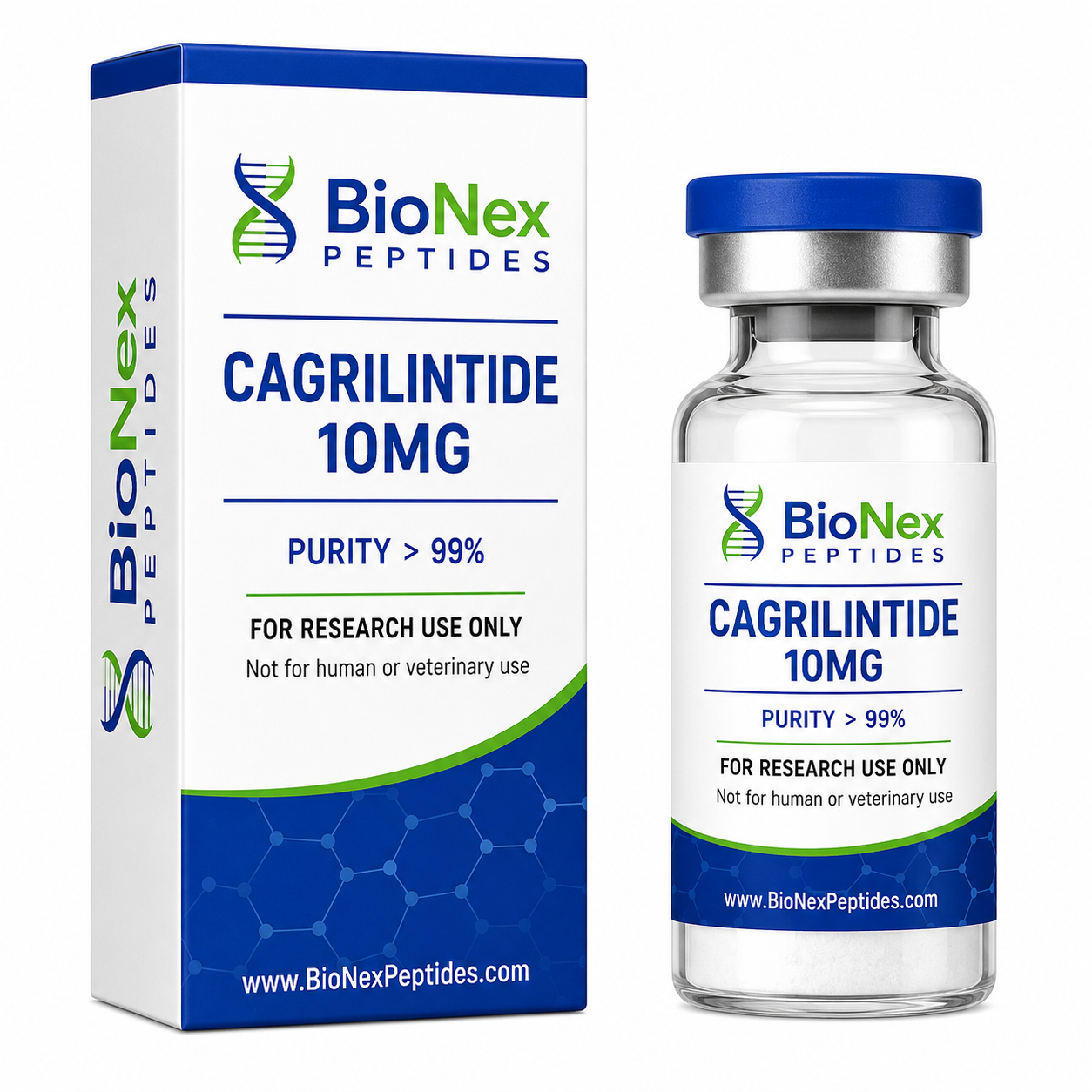
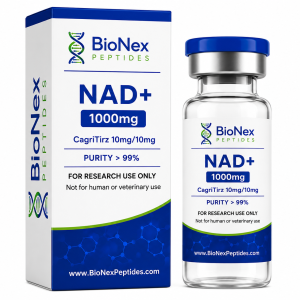
Cagrilintide 10mg Research Peptide
Cagrilintide 10mg is a premium lyophilized amylin pathway research peptide from BioNex Peptides, supplied for controlled laboratory and analytical research use only. This research peptide is commonly evaluated in studies involving amylin receptor pathway models, metabolic signaling research, satiety-related signaling models, receptor-associated activity, cellular response behavior, structure-function analysis, and controlled pathway-response research.
Cagrilintide 10mg Research Overview
Cagrilintide 10mg is designed for laboratory research involving amylin receptor pathway activity, metabolic pathway models, receptor-associated signaling, satiety-related pathway research, cellular signaling behavior, and measurable cellular response analysis. Researchers may review this peptide in controlled experimental settings where the goal is to compare pathway behavior, receptor interaction, and structure-function relationships under documented research conditions.
BioNex Peptides offers this research peptide for laboratories reviewing amylin pathway behavior, metabolic signaling models, receptor-associated cellular response, and controlled pathway-response systems. This product is presented strictly for research use only and is not intended for human use, animal use, diagnosis, treatment, prevention, consumption, weight-related use, appetite-related use, metabolic use, bodybuilding use, performance use, recovery use, or personal application.
Cagrilintide 10mg in Simple Terms
Cagrilintide 10mg is commonly reviewed in research models focused on amylin receptor pathway behavior, metabolic pathway research, satiety-related signaling models, cellular response mechanisms, receptor-associated signaling, and controlled structure-function studies.
- Used in research studying amylin receptor and metabolic pathway models
- Often reviewed in laboratory models focused on receptor-associated signaling activity
- Commonly included in satiety-related signaling and cellular response research
- Studied in comparative metabolic pathway and amylin pathway research models
- Reviewed for receptor interaction and structure-function relationships
- Supports comparison across amylin, incretin, and related pathway research
- Used in controlled laboratory models involving measurable pathway-response behavior
Cagrilintide 10mg Quick Summary
Cagrilintide 10mg is supplied as a 10mg lyophilized research peptide for qualified laboratory use. It is intended for controlled analytical studies involving amylin pathway research, receptor-associated signaling models, metabolic pathway activity, satiety-related pathway research, cellular response evaluation, and structure-function analysis.
BioNex Peptides presents this product in a clean research-only format to support organized product review, catalog browsing, and comparison across related research peptides. It is not positioned for supplement use, medical use, treatment use, prevention use, weight-related use, appetite-related use, metabolic use, bodybuilding use, performance use, recovery use, or any human or animal application.
Cagrilintide 10mg Quick Specs
- Product Name: Cagrilintide 10mg
- Also Known As: Cagrilintide
- Listed Size: 10mg
- Form: Lyophilized powder
- Purity: >99%
- Research Category: Amylin Pathway Research Peptide
- Use Classification: Research purposes only
- Intended Use: Laboratory and analytical research only
What is Cagrilintide 10mg?
Cagrilintide 10mg is a research peptide commonly reviewed in controlled laboratory models involving amylin receptor pathway research, metabolic signaling, satiety-related pathway models, and receptor-associated cellular response. Research involving this compound typically focuses on pathway behavior, receptor activity, cellular signaling, structure-function relationships, and measurable response patterns in experimental systems.
In laboratory research, this peptide is often evaluated in comparative studies where investigators examine amylin pathway activity, receptor-associated signaling, downstream pathway behavior, cellular response patterns, and controlled experimental outcomes. Its research relevance is commonly associated with amylin receptor pathway models, metabolic pathway research, and cellular signaling studies.
Because Cagrilintide appears frequently in metabolic pathway research discussions and peptide catalog references, this product may be compared with related research peptides to evaluate similarities and differences in pathway activity, molecular structure, receptor interaction, cellular response, and structure-function behavior. All information on this page is provided only for laboratory research context.
Research Applications
Cagrilintide 10mg is commonly selected for models where amylin receptor pathway activity, metabolic pathway behavior, receptor interaction, satiety-related signaling, and cellular response mechanisms are being reviewed. Researchers may use it in controlled in vitro or laboratory settings to observe pathway behavior and compare related peptide activity under documented experimental conditions.
Research applications may include amylin pathway models, receptor-associated signaling studies, metabolic pathway research, satiety-related pathway analysis, cellular response models, peptide structure evaluation, receptor pathway comparisons, and structure-function research. These research areas are laboratory-focused and should not be interpreted as medical, health, treatment, prevention, weight-related, appetite-related, metabolic, bodybuilding, performance, recovery, or personal-use claims.
Cagrilintide 10mg Research Highlights
- Cagrilintide 10mg is commonly evaluated in amylin pathway research
- Reviewed in receptor-associated pathway models under controlled laboratory conditions
- Studied for metabolic pathway behavior and cellular signaling activity
- Used in laboratory models involving satiety-related signaling research
- Commonly reviewed in structure-function and receptor pathway discussions
- Helpful for comparing amylin pathway and incretin pathway research peptides
- Reviewed for pathway activity, cellular response, and molecular structure relationships
- Presented as a lyophilized research-use-only peptide by BioNex Peptides
Research Background
This compound appears in research discussions related to amylin pathway models, receptor-associated signaling, metabolic pathway research, satiety-related pathway behavior, cellular response studies, peptide structure evaluation, and controlled pathway-specific response. Its structure allows researchers to focus on receptor pathway behavior, cellular signaling, and structure-function relationships under laboratory conditions.
Researchers may compare Cagrilintide 10mg with other metabolic pathway research peptides and blends to evaluate similarities and differences in pathway behavior, molecular structure, cellular signaling response, receptor-associated activity, and experimental research outcomes. This makes it relevant for laboratories studying amylin pathway models, receptor pathway systems, and controlled cellular response studies.
The research interest around this peptide is often connected to amylin receptor pathway behavior, metabolic signaling models, and satiety-related pathway research. In controlled research settings, investigators may review how peptide structure relates to receptor interaction, pathway response, cellular communication, and measurable experimental response patterns.
The purpose of this product description is to present the compound in a clear research-only context. No part of this description should be interpreted as suggesting human use, animal use, weight-related outcomes, appetite-related outcomes, metabolic outcomes, treatment outcomes, recovery outcomes, bodybuilding outcomes, performance outcomes, diagnosis, prevention, or personal application.
Cagrilintide 10mg Mechanism of Interest
The mechanism of interest for Cagrilintide 10mg is commonly discussed in relation to amylin receptor pathway research, metabolic pathway models, satiety-related signaling research, cellular response behavior, and structure-function analysis. In controlled laboratory models, researchers may evaluate how this peptide relates to receptor-associated pathway activity, peptide signaling, and experimental cellular response behavior.
- Amylin pathway research: evaluated in models involving amylin-related receptor pathway behavior
- Receptor-associated signaling: reviewed in controlled research focused on receptor pathway activity
- Metabolic pathway models: studied in experimental systems involving pathway-specific response
- Satiety-related signaling research: examined in laboratory systems involving controlled pathway behavior
- Cellular response models: reviewed in research-only systems involving measurable response activity
- Structure-function relationship: analyzed to understand how peptide structure may relate to observed experimental behavior
All mechanism-related information is presented for laboratory research context only. It does not describe human use, animal use, medical outcomes, treatment effects, prevention effects, weight-related effects, appetite-related effects, metabolic effects, bodybuilding effects, recovery effects, performance effects, or personal-use applications.
Why Researchers Review This Peptide
Researchers review Cagrilintide 10mg because it fits within amylin pathway research, receptor-associated signaling models, metabolic pathway studies, satiety-related signaling research, cellular response research, and structure-function analysis. Its research profile makes it useful for comparing peptide behavior across laboratory systems where receptor pathway activity and measurable cellular response are being documented.
In peptide research catalogs, it is often grouped with metabolic pathway research peptides because of its connection to amylin receptor pathway models and receptor-associated signaling studies. This product page is designed to help research customers review product details, related compounds, handling guidance, and research classification in one organized format.
Quality and Research Use Focus
BioNex Peptides provides Cagrilintide 10mg for research customers who need clearly labeled, professionally presented, and research-focused peptide products. Product pages are designed to make it easier to review specifications, related compounds, handling guidance, catalog categories, and research-only product information in a structured format.
This product is offered strictly for research purposes only. It is not intended for human use, animal use, consumption, diagnosis, treatment, cure, prevention, weight-related use, appetite-related use, metabolic use, bodybuilding use, performance use, recovery use, or personal application. BioNex Peptides maintains research-only language across its catalog to support clear and compliant product presentation.
Researchers working with lyophilized research peptides should follow proper laboratory handling procedures, documentation practices, storage standards, safety protocols, and applicable compliance requirements. This product is intended only for qualified research environments and controlled analytical use.
Related Research Compounds
Researchers comparing this product often also review related research peptides and metabolic pathway research compounds:
You can also browse the full BioNex Peptides catalog of research peptides for additional research-use-only compounds.
Also Known As
This product may appear in research-focused product references under related names. These alternate names are provided for catalog clarity only and should not be interpreted as different intended uses.
- Cagrilintide
- Cagrilintide 10mg
- Amylin pathway research peptide
- Amylin receptor research peptide
- Metabolic pathway research peptide
Cagrilintide 10mg Handling and Storage
Store Cagrilintide 10mg in a cool, dry environment and protect it from light and moisture. Refrigeration is commonly used for long-term storage of lyophilized research peptides and metabolic pathway research compounds. Avoid repeated exposure to heat, humidity, or direct light during handling.
Research materials should be handled according to appropriate laboratory standards. Storage and handling procedures should be performed by qualified individuals in research settings where proper documentation, environmental control, and safety practices are maintained.
Additional Research Information
For general scientific literature and broader peptide-related research references, researchers may review publicly available biomedical research resources such as PubMed.
Explore more research peptides from BioNex Peptides, or review related metabolic pathway research compounds available in our catalog.
Cagrilintide 10mg FAQ
What is Cagrilintide 10mg used for in research?
Cagrilintide 10mg is evaluated in laboratory research involving amylin receptor pathway models, metabolic pathway research, satiety-related signaling, receptor-associated cellular response, and structure-function analysis.
What category of research peptide is this product?
It is commonly categorized as an amylin pathway research peptide and is often reviewed in studies involving receptor-associated signaling, metabolic pathway models, satiety-related pathway behavior, and cellular response analysis.
Is Cagrilintide 10mg intended for human or animal use?
No. Cagrilintide 10mg is for research purposes only. It is not intended for human or animal use, diagnosis, treatment, cure, prevention, consumption, weight-related use, appetite-related use, metabolic use, bodybuilding use, performance use, recovery use, or personal application.
How should this research peptide be stored?
It should be stored in a cool, dry place and protected from light and moisture. Refrigeration is commonly recommended for long-term storage of lyophilized research peptides.
Is this product related to amylin pathway research?
Yes. This peptide is commonly referenced in amylin pathway, amylin receptor, metabolic pathway, and receptor-associated signaling research discussions. These references are provided strictly for catalog clarity and laboratory research context.
What compounds are commonly compared with this product?
Researchers often compare it with related metabolic pathway research compounds such as CagriTirz 10mg/10mg, KLOW 80mg, Lipo-C 10mg, Mazdutide 10mg, and Retatrutide 15mg to evaluate pathway activity, receptor interaction, cellular response, structure, and experimental behavior.
Disclaimer
For Research Use Only. Cagrilintide 10mg is not intended for human or animal use, diagnosis, treatment, cure, prevention, consumption, weight-related use, appetite-related use, metabolic use, bodybuilding use, performance use, recovery use, or personal use. All information provided is for laboratory research and analytical purposes only.