Seacrh

Age Verification Required

By entering this website, you confirm that you are at least 21 years of age and that you are a qualified researcher or purchasing on behalf of a research institution.

All products sold by BioNex are for laboratory research purposes only. They are not intended for human or animal consumption, and no medical, therapeutic, or diagnostic use is expressed or implied.

You acknowledge that BioNex assumes no liability for misuse, misapplication, or unauthorized use of any product purchased from this website.

By clicking “I Agree,” you accept full responsibility for compliance with all applicable laws and regulations.

Peptide Sale

No products in the cart.

Categories:

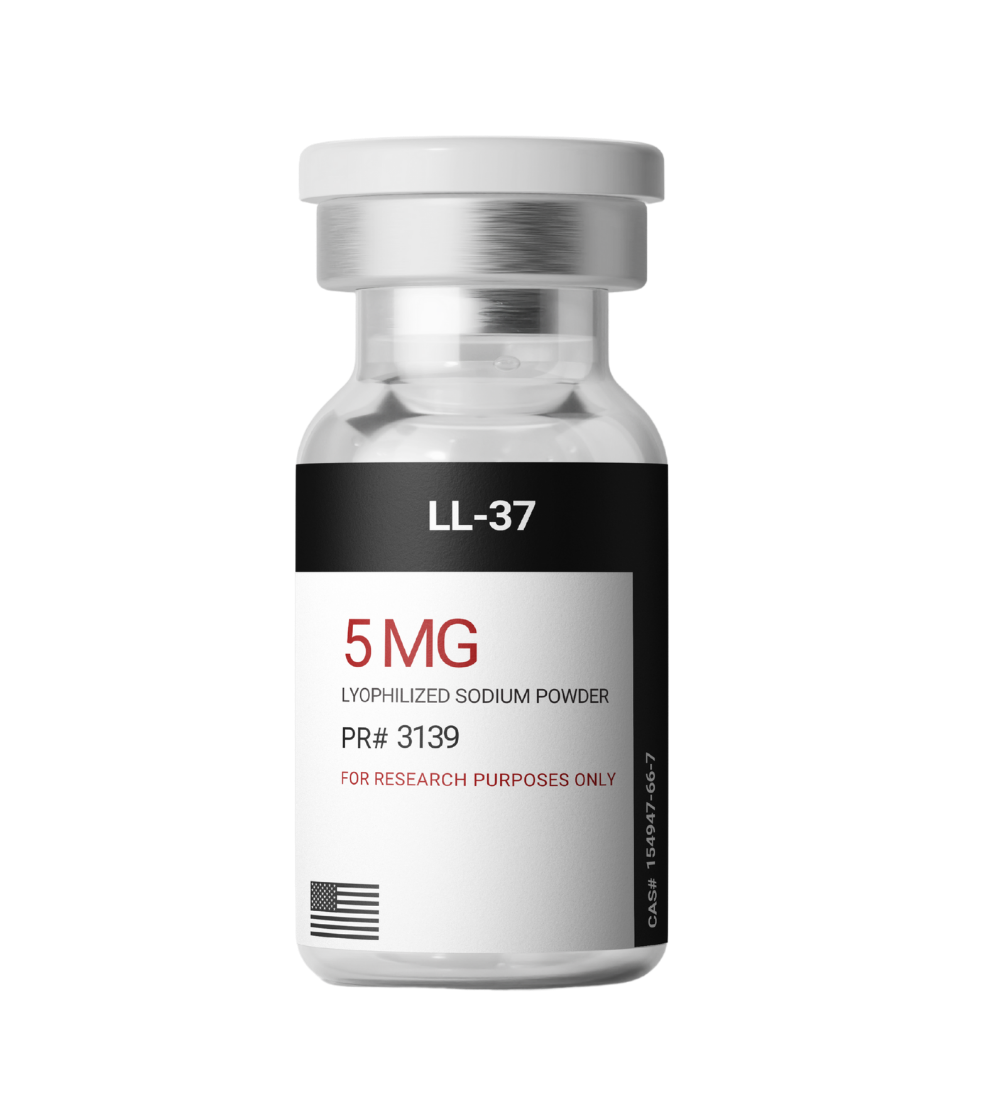
LL-37 5mg

$49.00

or
Free delivery from $5000.
We will deliver by courier or to the point of issue of orders tomorrow or on another convenient day.
Free fitting and partial order redemption are available.

LL-37 5mg

  • Form: Lyophilized powder
  • Purity: >99%

Overview

LL-37 5mg, also known as Cathelicidin, is a cationic peptide composed of 37 amino acids. It is primarily found in neutrophils and produced by the extracellular breakdown of hCAP18 proteins through protease activity. LL-37 has been researched extensively for its antimicrobial properties and role in immune defense.

Research Background

Antimicrobial peptides like LL-37 are structured to target bacteria, fungi, and some viral strains. Unlike traditional antibiotics, they often act in a non-specific manner, which researchers believe makes it difficult for pathogens to develop resistance. LL-37 is classified as an α-helical peptide and is considered critical for maintaining innate immunity against microbes.

Mechanism of Interest

  • Membrane interaction: Suggested to bind to bacterial membranes via electrostatic properties, followed by lateral diffusion across the lipid layer.
  • Membrane disruption: Studies suggest mechanisms including pore formation or direct destabilization of microbial membranes, leading to cell death.
  • Protective stability: May form agglomerates and lipid bilayers, potentially shielding it from rapid enzymatic degradation.

Molecular Information

  • Molecular Formula: C205H340N50O53
  • Molecular Weight: 4493.34 g/mol
  • Other Names: CAP-18

Related Resources